Ying Ang – Fruiting Bodies
€ 51,00
1 in stock
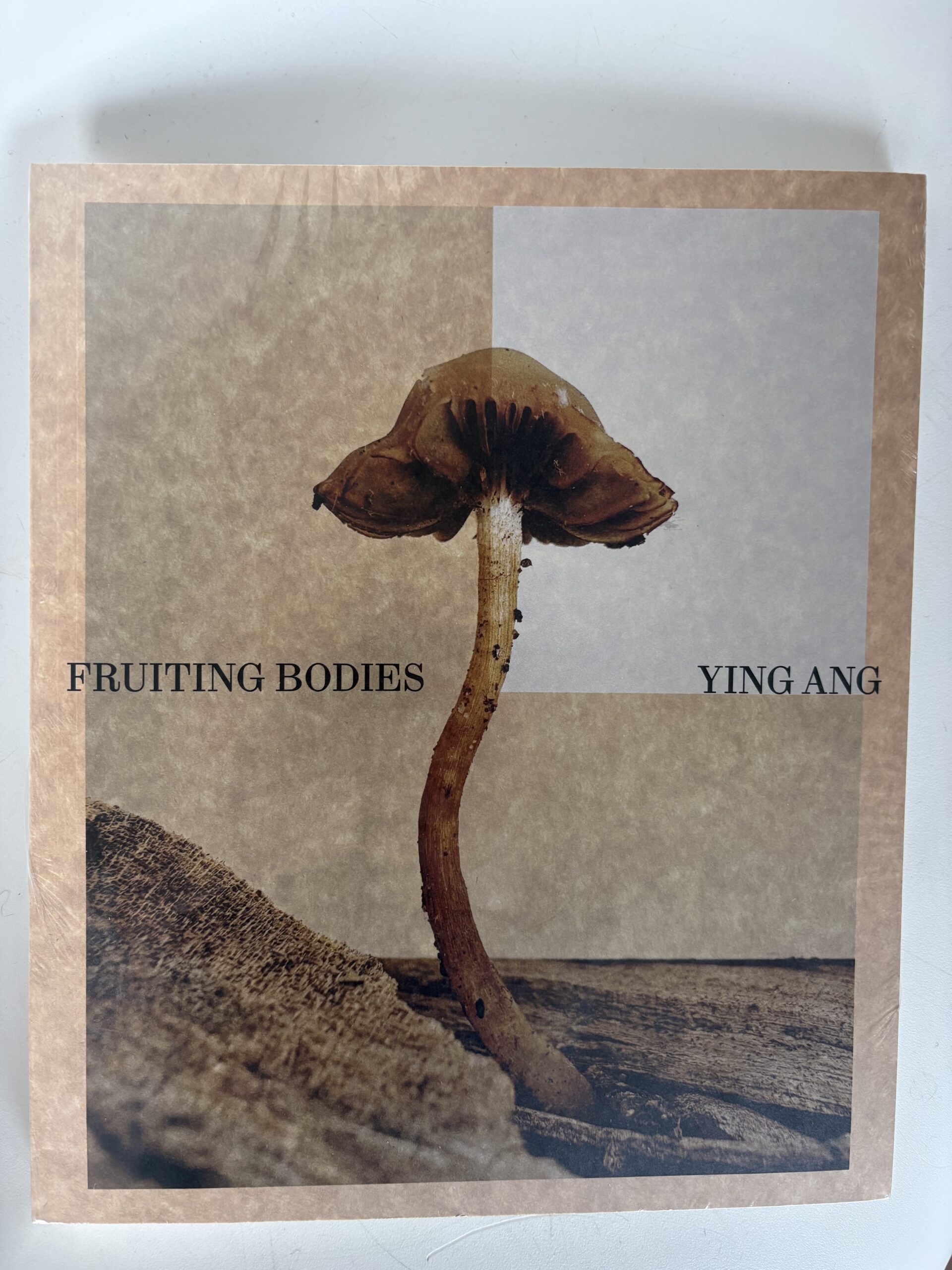
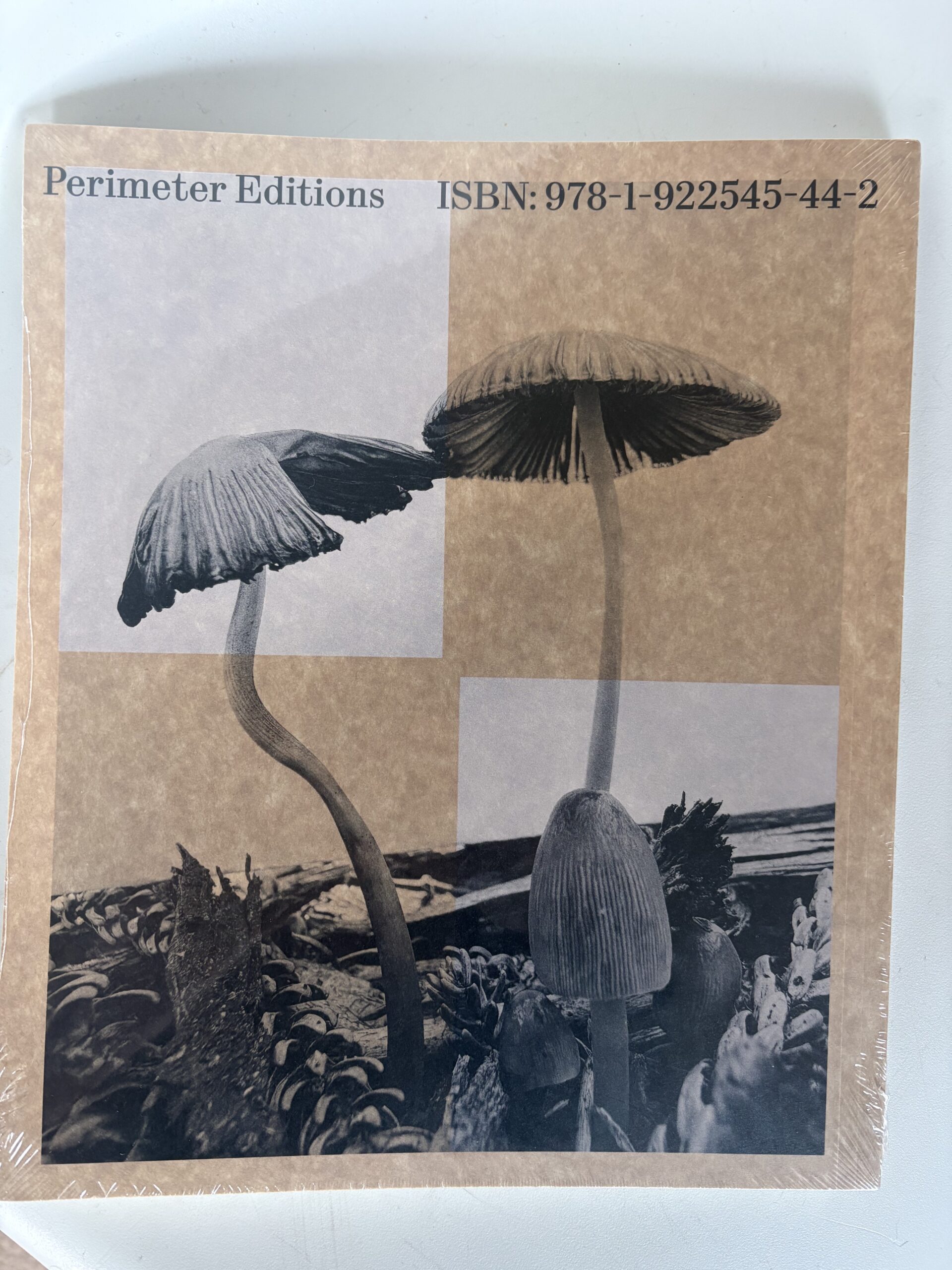
Ying Ang’s Fruiting Bodies reimagines the mushroom as both a biological form and a feminist metaphor – an emergent, generative force that challenges dominant narratives of fertility and the female body. Photographed while walking through inner-city parks close to the artist’s home in Melbourne, the series examines how the fetishisation of fertility has shaped cultural perceptions of women, nature and reproduction, questioning whether growth and abundance must always serve a reproductive imperative.
Ang’s photographs capture mushrooms in various states of emergence: solitary and erect; clustered in intimate pairs; decaying and dispersing spores. In these images, the fruiting body becomes an uncanny stand-in for the female form – soft yet resilient, sensuous, and categorically enigmatic. The undulating stems and textured caps – the act of pushing through and returning to the earth – evoke the eroticised, reproductive framing of the female body in art and culture, yet they also resist it. Unlike traditional fertility symbols that reinforce womanhood as a vessel for production, these mushrooms thrive in cycles of decay and renewal, blurring the boundaries between birth, death, and transformation.
Certain schools of evolutionary theory discuss the role of postmenopausal women by reframing aging not as biological redundancy but as a vital stage of life that sustains and enriches communities, arguing that their continued existence beyond childbearing years serves a critical function: to pass on knowledge, wisdom, and cultural memory. Similarly, Fruiting Bodies – Ang’s first book for Perimeter Editions – finds power in the non-reproductive phases of life. Just as mycelium persists unseen beneath the forest floor, feeding, connecting, and shaping ecosystems, women beyond fertility continue to shape society in profound ways.
Ecofeminist scholars have long argued that patriarchal systems exploit both the earth and the female body through the same logic – one that demands constant output, control, and utility. Fruiting Bodies responds to this by embracing the fungal model: a form of fertility that is rhizomatic rather than hierarchical; collective rather than possessive; disruptive rather than obedient. Here, Ang challenges the fetishisation of fertility and proposes a different kind of reproductive power – one that is intellectual, communal, and ever-evolving.
Fruiting Bodies has received Honorable Mention for the Pollux Prize and International Photography Awards, was the winner of the Julia Margaret Cameron Award in the nature category, finalist for the Encontros da Imagem Book Award, Form Photo Award and Lucie Foundation Book Prize for 2025 and selected for the PhotoVogue East & Southeast Asian Panorama to be shown in Milan in 2026.
Publisher:Perimeter Books
Year: 2025
Pages:160
Language: English
Format: Soft cover
Dimensions: 23 x27 cm